
They Sold Everything and Moved to the Hills
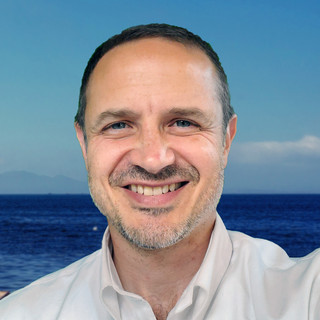
"Risking it All" (Part 1) chronicles activist Michael Weichbrod, founder of Homebound, and his families journey from Lakewood, NJ to Ramat Bet Shemesh Israel, to the hills of Judea in an inspiring story about love for Torah, the Land of Israel and being the change.
Spotify
Youtube
Apple
Subscribe to the TRIBE:
Risking It All: One Family’s Hilltop Bet on the Future of Judea
On a windy hill in the Judean hills overlooking the Dead Sea, a small house stands nearly finished. Built in just a few months with the help of neighbors and friends, it represents far more than a new home. For Michael Wiechbrod and his family, the structure is the physical expression of a belief: that Jews should not only live in Israel, but actively settle and build the land of Judea and Samaria.
Wiechbrod did not grow up on a windswept hilltop. Like many religious Jews who eventually immigrate to Israel, he spent his early years in the American Orthodox centers of Brooklyn and Lakewood, New Jersey. After years of studying Torah, he said he reached a realization that changed his life.
“After learning enough Torah, I asked myself, ‘What am I doing not living in Eretz Yisrael?’ It just didn’t make sense anymore,” he explained.
With his wife’s support, he moved to Israel. They initially settled in Beit Shemesh, a rapidly growing city west of Jerusalem with a large English-speaking Orthodox community. For many immigrants, Beit Shemesh becomes a comfortable bubble—familiar culture, familiar language, and established infrastructure.
But after several years, Wiechbrod began exploring beyond it.
Driving through the hills of Judea and Samaria, he was struck by the vast stretches of open land. “I’m looking around thinking, why is there so much space out here while we’re all crammed into Beit Shemesh?” he said.
The question led him to research the political and legal complexities surrounding settlement in the area. Unlike cities inside Israel’s internationally recognized borders, many parts of Judea and Samaria require special government approval for new Jewish construction. Unauthorized hilltop communities often face legal disputes or demolition orders.
For Wiechbrod, however, the experience reinforced his conviction that Jews should be living on the land.
“I said to myself, this is no good,” he recalled. “I’ve got to be part of the change. We’ve got to settle the land.”
Not long afterward, he began searching for a place to build.
Eventually he arrived at a remote hilltop where only one other Jewish resident lived in a small blue house. Wiechbrod knocked on the man’s door and asked if he could build nearby.
The response surprised him.
“He told me he’d been waiting for someone to come join him,” Wiechbrod said.
The two men informally agreed on a rough boundary between their properties, and Wiechbrod began planning construction. Standing with his wife and children on the rocky ground, he placed a painted stone where he envisioned the house.
“That’s where we said we’re going to build,” he recalled.
Within months, a three-bedroom house began to take shape.
The structure was built using prefabricated panels, a method that allowed the exterior shell to go up in only a couple of days. Much of the labor came from friends and residents of nearby hilltop communities. Wiechbrod made a point of hiring only Jewish workers and purchasing materials from Jewish suppliers.
Inside, the home is simple but spacious: a large living area, several bedrooms, a bathroom with a tub, and plans for a playroom and an office lined with religious books.
The house sits at a dramatic vantage point. From the bedroom window, the sunrise appears over the Jordan Valley and the mountains beyond. On clear days, the Dead Sea glimmers in the distance.
But life on a hilltop is not easy. The winds can be powerful enough to rip objects from the ground. During the winter construction period, a section of the house once collapsed and had to be rebuilt.
“You get the challenges,” he said with a smile. “But that’s part of building Eretz Yisrael. Eretz Yisrael is only acquired through yisurim.”
Despite the uncertainty, the family plans to move in as soon as the house is ready.
The decision, he says, is about more than personal living space.
Before building on the hilltop, Wiechbrod had already begun working to encourage Jewish immigration to Israel through a project called Homebound to Eretz Yisrael, producing videos and online content promoting aliyah. The project grew out of his desire to inspire other Jews to follow the path he took.
“The more I learned about Eretz Yisrael, the more I fell in love with it,” he said. “And the more I wanted other Jews to come.”
Yet moving to Israel itself was only the first step.
“For me it wasn’t enough just to live here,” he explained. “I wanted to take it to the next level.”
In his view, establishing Jewish presence on undeveloped hills is part of a larger historical and spiritual process.
“I think everything with Eretz Yisrael is Divine,” he said. “As we get closer to redemption, Hashem opens the gates for Jews to return.”
Historically, waves of Jewish immigration to the land of Israel have occurred during moments of upheaval or opportunity. Wiechbrod sees the present moment as another such turning point.
“You would think Jews would flock here,” he said. “Some did in earlier generations, but the vast majority didn’t.”
Building homes on the hilltops, he believes, helps strengthen Israel’s presence in areas where territorial claims remain contested.
“If we don’t take these hills, someone else will,” he said bluntly.
Since construction began on his home, other people have begun establishing houses nearby, slowly forming a small cluster of residents.
The pattern is common in the region: a few pioneers move first, followed gradually by others. Over time, a small outpost can grow into a recognized community.
“There were no neighbors when I started except the guy in the blue house,” Wiechbrod said. “Once we started building, people began coming.”
Today several nearby hilltops host small communities with synagogues, kollelim and schools for children. Even though the area feels remote, established towns and institutions are often only a short drive away.
For Wiechbrod, the experiment represents both personal risk and long-term hope.
He sold his apartment in Beit Shemesh to finance the construction, leaving behind a stable urban life for a far less predictable one.
But he insists the decision was made as a family, and with his wife’s full support.
“She’s amazing,” he said. “She was nervous, of course, but excited too.”
The footage was recorded in April, 2025 and the Weichbrod’s have been living there for about a year now. Standing on the hilltop as the wind sweeps across the landscape, Reb Michael Wiechbrod looks toward the horizon where the Judean mountains fade into the distance.
For him, this is not just a building project. It is a statement about faith, identity, and the future of the land.
“We just decided,” he said, “we’ll be the first few people here.”
Spotify
Youtube
Apple
Subscribe to the TRIBE:


Comments