
After Oct. 7, They Turned Heartbreak Into Action | Lev Echad (OneHeart)
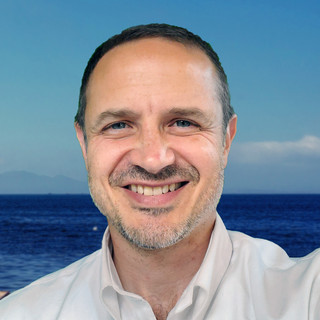
After October 7, two entrepreneurs saw a country full of need—and people ready to respond. Their partnership with Lev Echad reveals what it takes to bring the two together.
Called to Build explores the people, decisions, and defining moments that build lives of mission. Through personal conversations and powerful stories, meet the visionaries turning ideas into action for the Jewish people—and discover what happens when someone decides, “This is mine to do.”
A TRIBE Journal series in partnership with Afikim.
The woman began to cry as they were getting ready to leave.
A missile had destroyed her home. Two men had come to help clean up. According to one of them, they had found her through the very volunteer platform they were building. After spending so much time behind their screens, he and his partner, Yotam, had decided to use it themselves.
Now she was trying to understand why they had come.
“You’ve never met me,” he recalls her saying. “You don’t owe me anything.”
There is a practical way to describe this encounter: a request was posted, volunteers were connected, help arrived. That is the kind of transaction a platform can count.
But her response suggests that something else had happened. Strangers had entered a moment of profound vulnerability and accepted a share of its burden. For a few hours, her crisis had become their responsibility, too.
How do you make that happen again?
And then again, for someone else?
After October 7, the two entrepreneurs found themselves looking at two realities. Families had been evacuated. People were injured in hospitals. Across the country, others were looking for ways to help.
The need was visible. So was the willingness.
What was harder to see was the route between them.
A person can be ready to volunteer and still have no idea where to go. An organization can know exactly what a family needs and still struggle to find the right person to meet it. Multiply those small difficulties across an emergency, and the problem becomes much larger than any individual’s generosity can solve.
For Irad (Moshe) Renan, that problem had acquired a deeply personal meaning. His friend Liron Snir, z”l, with whom he had served in the army, fell in combat. Before going in, Liron had left a note. In the interview, his friend recounts its message: if something happened to him, he wanted those he left behind to continue his mission and spread goodness.
The instruction was immense. Its practical meaning was less obvious.
“I didn’t really know what to do,” he says, “because it’s a very big mission.”
That admission matters. We often tell stories about people with a calling as though the calling arrived with a set of instructions. Here, the conviction came before the plan.
The plan began to emerge in conversations with Yotam Hanoch. All around them were people who needed help and people who wanted to provide it. Perhaps building a connection between those groups could become a way to carry the mission forward.
Their shorthand for the idea was disarmingly familiar: “Airbnb for kindness.”
The comparison helps explain the ambition. A useful platform must make a possible connection easy enough to become an actual encounter. Someone needs help. Someone nearby has the time or ability to offer it. The system gives them a way to find each other.
In the interview, the team describes a process that combines human review and AI algorithms to validate requests, then searches a pool of potential volunteers for a suitable match.
The resulting invitation is specific: there are opportunities in your neighborhood. Can you help?
Specificity changes the decision. “Do something good” leaves almost everything unresolved. An actual request gives a person something concrete to say yes to.
But building the technology introduced another problem. A platform needs enough people on both sides to be useful. Volunteers need opportunities. Organizations need volunteers. In the early stages, each group’s reason to participate depends partly on whether the other group is already there.
The entrepreneurs spent roughly a year developing their independent startup and bringing organizations and volunteers onto the platform, according to their account. The partnership with Lev Echad—One Heart—then changed its scale.
They brought technology. One Heart brought an established network of volunteers, organizational partners, and field operations.
The team reports that the partnership brought 10,000 new users onto the platform in a single night. During the war with Iran, they say, the combined effort helped tens of thousands of people over two weeks.
The underlying lesson is about what the partnership joined together: a system for matching people and an organization already equipped to act.
It also complicates the familiar story of the lone founder with a brilliant idea. In this account, an important breakthrough came through joining forces. The existing relationships and field experience gave the technology a stronger foundation.
Then there is the woman whose home had been hit.
Her story returns us to something the growth figures cannot tell us: what the connection felt like when it reached a person. Irad Renan describes leaving that encounter changed. Volunteering had allowed him to affect someone else’s life in a tangible way. It had also altered his own sense of what mattered.
“It changes your life,” he says.
That is the larger possibility behind the platform. Each completed request meets an immediate need. It may also give the people involved a reason to trust that help can come—and a reason to offer it the next time.
The team hopes to extend the model from Israel into Jewish diaspora communities and eventually more widely. Whether that ambition succeeds will depend on making useful connections in the particular places where people live.
For now, the question is close at hand.
Somewhere, someone needs help. Somewhere nearby, another person would be willing to give it.
What would it take to bring them together?
Watch the Lev Echad story in Called to Build: Lives of Mission.
Called to Build explores the people, decisions, and defining moments that build lives of mission. Through personal conversations and powerful stories, meet the visionaries turning ideas into action for the Jewish people—and discover what happens when someone decides, “This is mine to do.”
A TRIBE Journal series in partnership with the Afikim Foundation.

Comments